Designing an engaging, long-lasting outdoor play space requires making smart material decisions early in the process. While slides and climbing frames capture the initial design focus, the surfacing underneath handles the real work: protecting kids from falls, keeping the space accessible, and dictating your maintenance workload for years to come.
For Texas school districts, cities, churches, daycares, and commercial sites, picking a safety surface comes down to balancing installation costs against long-term site care. The three main choices on the market today are poured-in-place rubber, synthetic turf, and engineered wood fiber. This guide breaks down how each option performs, what it costs, and where it fits best.
Poured-in-Place Rubber: The Seamless, Customizable Choice
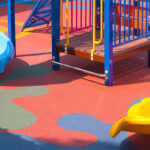
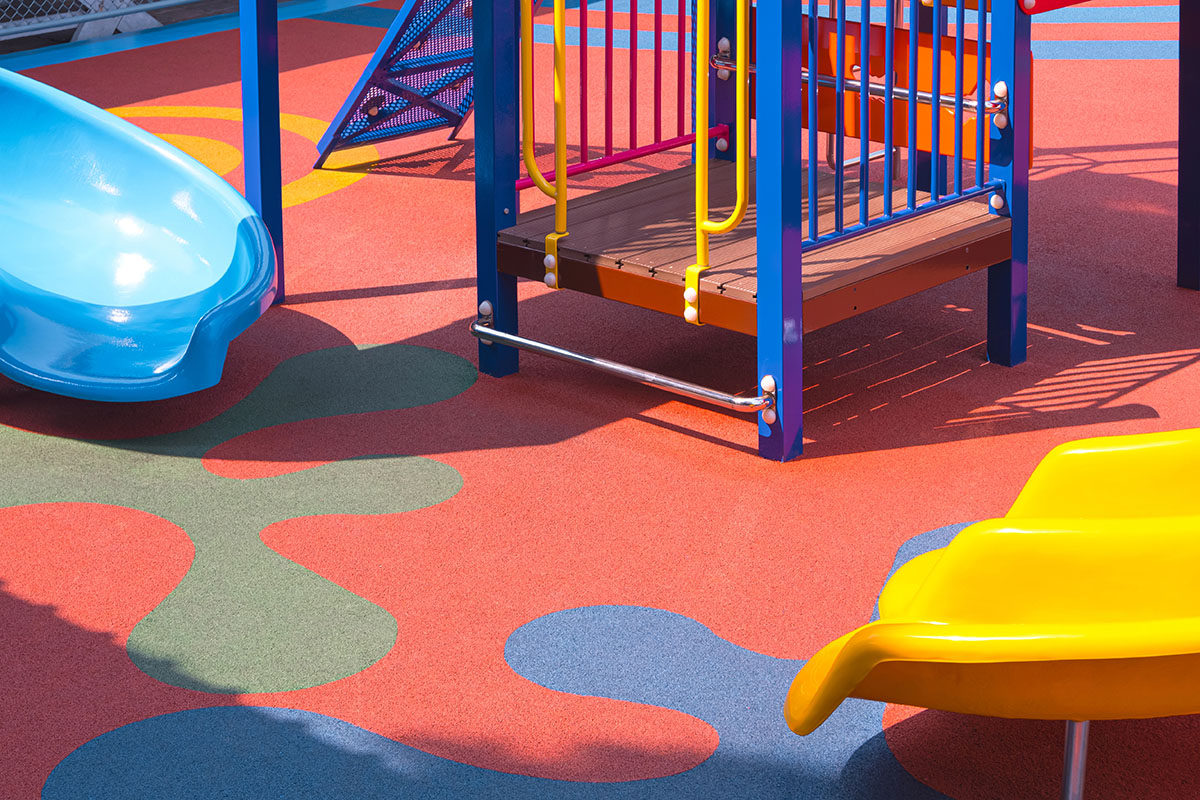
Poured-in-place (PIP) rubber is a seamless system mixed and troweled on-site in two distinct layers. It features a thick, shock-absorbing base made from recycled rubber, topped with a durable wear layer of Ethylene Propylene Diene Monomer (EPDM) or Thermoplastic Vulcanizates (TPV) rubber.
Safety & Shock Absorption Performance
Because installers pour this material on-site, they can adjust base layer thickness to match the fall heights of your specific equipment. Whether backing up a toddler slide or a ten-foot climber, PIP rubber provides reliable shock absorption that meets ASTM F1292 standards.
Accessibility Compliance
PIP rubber offers top-tier accessibility. Its continuous, flat surface creates zero rolling resistance for wheelchairs, walkers, and strollers. It naturally meets Americans with Disabilities Act (ADA) and Texas Accessibility Standards (TAS) guidelines without needing daily attention.
Design Flexibility
Design versatility is where PIP rubber shines. Installers can incorporate bright patterns, hopscotch grids, or custom logos straight into the surface.
Financial & Maintenance Reality
While PIP rubber carries the highest initial installation cost of the group, its ongoing upkeep is minimal. It does not shift, wash out, or require routine topping off. Over a 10 to 15-year span, lower maintenance demands help balance out the upfront expenditure.
Synthetic Turf: A Natural Look with Industrial Durability
Playground turf pairs the clean look of a fresh lawn with the durability required for heavy daily traffic. Modern systems combine UV-treated polyethylene grass blades, specialized infill, and heavy-duty foam pads installed underneath for impact protection.
Safety & Shock Absorption Performance

Fall protection comes mainly from the shock pad installed beneath the turf rather than the grass blades themselves. Depending on pad thickness, playground turf systems can handle fall height ratings up to 12 feet.
Accessibility Compliance
As a stable, unitary surface, synthetic turf stays fixed underfoot. Wheelchairs and mobility equipment roll across low-pile play turf without sinking, keeping the play space inclusive.
Comfort & Appearance
Turf offers a neat, green park aesthetic year-round without mud, dead patches, or irrigation demands. Quality setups use specialized infill to keep the play floor hygienic and comfortable under direct sunlight.
Financial & Maintenance Reality
Synthetic turf sits in the mid-to-high price range for upfront installation. Maintenance involves regular brushing to keep the fibers upright, rinsing away debris, and inspecting high-wear zones under swings and slide exits.
Engineered Wood Fiber: The Budget-Friendly Standard

Engineered wood fiber (EWF) is an engineered loose-fill material made from pure hardwoods and softwoods. Unlike standard garden mulch, real EWF uses bark-free, mechanically shredded wood fibers that interlock under pressure to form a cushioned mat.
Safety & Shock Absorption Performance
When maintained at proper depths (typically 9 to 12 inches), EWF offers impact protection rated for fall heights up to 10 feet. The interlocking fibers cushion falls effectively as long as depth remains uniform across the play area.
Accessibility Compliance
EWF complies with ADA standards when correctly installed and compacted. However, because it is loose material, active play displaces wood chips around high-traffic zones. Without frequent raking and refills, low spots form that make wheelchair movement difficult.
Aesthetics
EWF provides a natural aesthetic that fits into wooded parks, school campuses, and community spaces. It is non-toxic, chemical-free, and produced from renewable wood sources.
Financial & Maintenance Reality
Wood fiber requires the lowest upfront outlay of any professional safety surface, making it an accessible choice for tight project budgets. However, it demands the most ongoing care. Site managers must assign staff to rake high-traffic areas regularly and budget for fresh material every 1 to 3 years as the wood settles and decomposes.
Playground Surfacing Comparison
| Surface Type | Upfront Cost | Upkeep Needs | Max Fall Rating | Accessibility | Expected Lifespan | Customization |
| Poured-in-Place Rubber | High | Minimal | Up to 12+ ft | High | 10–15+ Years | High (Colors & Logos) |
| Synthetic Turf | Mid-to-High | Low Routine | Up to 12 ft | High | 10–15 Years | Moderate (Lawn Look) |
| Engineered Wood Fiber | Lowest | High (Raking/Topping) | Up to 10 ft | Moderate (Needs Care) | Refill Every 1–3 Years | Natural Texture |
FAQs
What safety standards apply to commercial playground surfacing in Texas?
Surfacing must meet ASTM F1292 for impact absorption, ASTM F1951 for wheelchair accessibility, and applicable Texas Accessibility Standards (TAS). Professional installation ensures subgrade prep and material depths satisfy these requirements.
How does Texas summer heat affect rubber and turf choices?
Texas sun brings high heat and strong UV exposure. Quality poured-in-place installations use lighter rubber shades to limit heat absorption, while modern turf installations use specialized heat-reflective materials and cool infills to remain comfortable.
Can you mix different surfacing materials on one playground?
Yes, mixing surfaces is a smart way to manage your budget. Many locations place poured rubber or turf around high-traffic equipment and main pathways, then use wood fiber in outer play areas to balance total costs.
How often does engineered wood fiber need a top-off?
Due to foot traffic, wind, and natural decomposition, wood fiber usually needs extra material added every 1 to 3 years. Maintaining a depth of 9 to 12 inches keeps the space safe and compliant.
What ground preparation is required before installation?
Solid drainage and site prep are critical for all surface types. Poured rubber and synthetic turf require a compacted stone or concrete subgrade. Wood fiber requires proper containment borders and sub-surface filter fabric to manage water and prevent weed growth.
Planning Your Playground Project
Choosing safety surfacing comes down to balancing upfront capital against future maintenance capacity. Understanding how poured rubber, turf, and wood fiber handle daily use makes it easier to select the right fit for your site and team.
When updating a school ground, building a city park, or upgrading a commercial facility, working with experienced park builders ensures the site is prepped, installed, and certified correctly. Reach out to the specialty construction team at T.F. Harper & Associates LP to review site options and request a clear estimate for your project.